
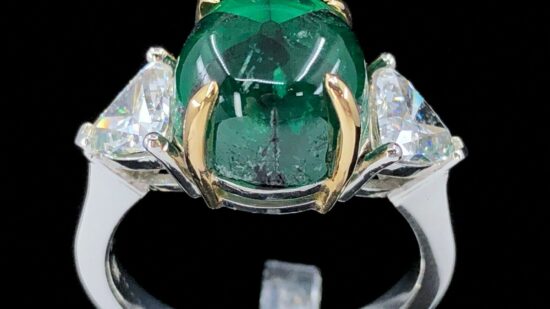
For centuries Colombian emeralds have symbolised status and beauty, adorning the crowns of royalty and the collections of the world’s most discerning connoisseurs. In recent years that perception has shifted. Beyond their aesthetic allure, fine Colombian emeralds are now recognised as a sophisticated investment asset class. Ultra-high-net-worth investors and family offices increasingly treat them as a concentrated, portable store of value with a low correlation to listed markets.
The market is also among the most heavily watched in the world. UK and EU buyers face overlapping tax, customs, and anti-money laundering obligations that can derail a transaction long before the stone is unwrapped. This article maps the path from investment thesis, through gemmological selection, to cross-border compliance and tax planning in the United Kingdom and Spain.
1. The investment thesis
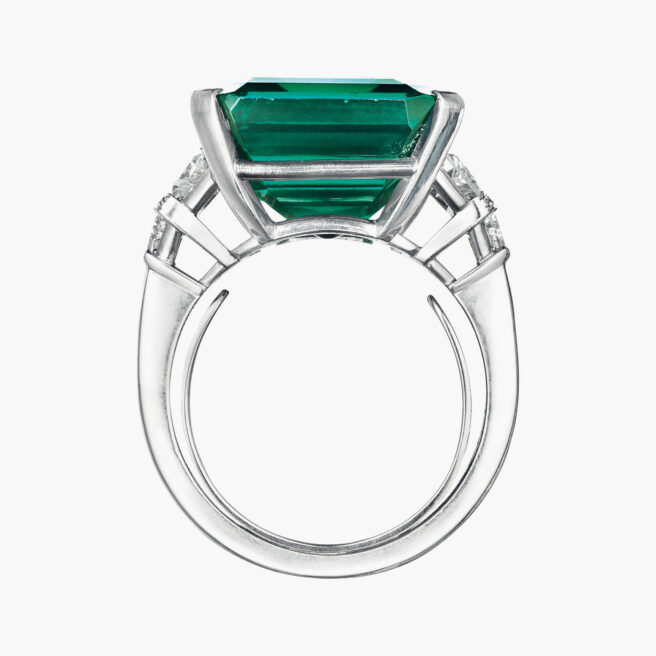
Colombian emeralds from the iconic mining regions of Muzo, Coscuez, Chivor, and Quípama remain the global benchmark for brilliance and purity, and the reference points for serious collectors and trade buyers in London, Madrid, Paris, and Geneva. Direct sourcing from Colombian dealers and miners has accelerated as private clients seek alternatives to traditional auction channels and as family offices treat coloured stones as a portable, low-correlation store of value.
Three structural factors underpin the investment case.
Geological scarcity. Unlike diamonds, which can be lab-grown or recovered in volume from multiple deposits, the geological conditions that produced Colombian emeralds are unique. Supply is physically constrained and the market knows it.
Market maturity. With international mining groups now active in Colombia and certification standards tightening, the trade has professionalised. The “wild west” pricing of two decades ago has given way to a more transparent, bankable asset class.
Inflation hedge. As a hard, durable asset, fine emeralds preserve intrinsic value when fiat currencies do not. Over the past fifteen years, top-grade Colombian emeralds have appreciated at approximately ten per cent per annum on average, and recent auction results — including a shipwreck emerald ring achieving USD 1.2 million against a USD 70,000 estimate — illustrate the upside in correctly sourced stones.
The appeal is also one of physical sovereignty. A multi-million-dollar emerald fits in the palm of the hand. No real estate portfolio, no fine art collection, can match that portability. The corollary is that the same characteristics that make the stone attractive to investors make it attractive to regulators.
2. What makes a stone investment grade
Not every green stone is an investment. Investment-grade material satisfies rigorous criteria across the traditional 4Cs, with particular emphasis on origin and treatment.
Colour and clarity. The market prizes the deep, vivid Muzo green — a saturation that appears to glow from within. Internal characteristics such as gota de aceite (oil drop) and alas de mariposa (butterfly wings) are not flaws; they are microscopic markers of geological purity that enhance value.
Treatment. Over ninety-nine per cent of emeralds in the trade are treated with cedar oil to fill surface-reaching fissures. A genuinely “no-oil” emerald is an extreme rarity and commands a substantial premium at auction. The distinction between no oil, minor oil, moderate oil, and significant oil — properly evidenced by laboratory report — drives valuation, insurance, and, as we shall see, fiscal exposure on both sides of the Channel.
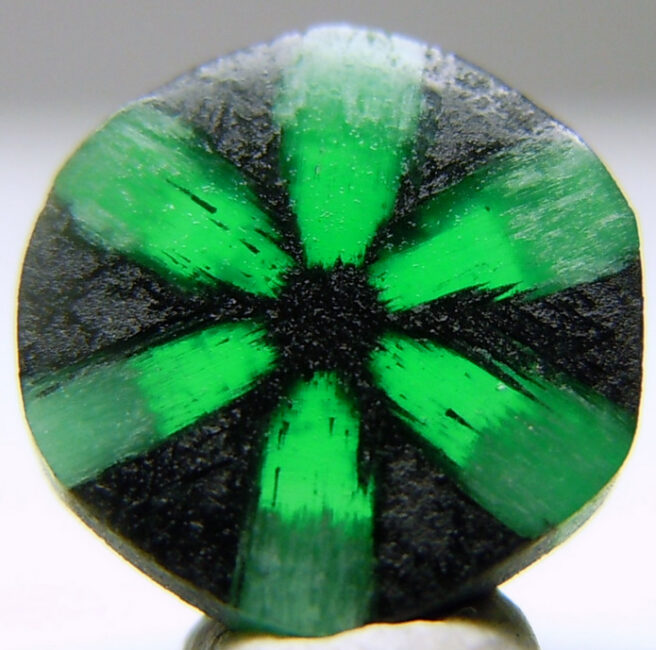
Rarities. Specific phenomena such as the Trapiche emerald, with its six-rayed star pattern, are increasingly sought by advanced collectors looking for one-of-a-kind allocations.
Independent gemmological certification from GIA, SSEF, Gübelin, or AGL is the floor for any stone of meaningful value. For Colombian material specifically, geochemical fingerprinting from CDTEC Gemlab in Bogotá — the Technological Development Centre for the Colombian Emerald — provides what amounts to a DNA test for the stone. Origin certification of that quality is invaluable in subsequent fiscal valuations, wealth tax declarations, probate, and any future audit.
3. Provenance, source of funds, and customer due diligence
Regulators have followed the money. HMRC has tightened its grip on dealers in precious stones through the Money Laundering Regulations 2017 and parallel guidance for art market participants. Spain has refined the Ley 10/2010 framework, with SEPBLAC supervising sujetos obligados that include traders in precious stones and works of art. The European Union’s sixth anti-money laundering package and the operational launch of the new Anti-Money Laundering Authority in Frankfurt mark a step change in cross-border enforcement. None of this is a reason to avoid the Colombian market. It is a reason to enter it with a properly mapped compliance and tax strategy.
The buyer who arrives in Bogotá with a suitcase of euros is no longer a romantic figure. He is a regulatory liability.
The starting point is the export chain inside Colombia. A defensible file traces the stone from an ANM-registered miner with valid RUCOM registration, through a RUT-registered exporter, with a DIAN export declaration and a certificate of origin issued under Andean Community Decision 416. Without that paper trail, enhanced due diligence becomes mandatory in the UK and EU and frequently impossible in practice. The dealer who cannot evidence the chain is selling a beautiful stone with a regulatory bomb attached.
Most professional buyers are themselves within the AML net. In the United Kingdom, dealers handling cash payments at or above €10,000 fall within the high value dealer regime and must register with HMRC. Dealers selling stones mounted into recognised art objects may also fall within the art market participant regime. In Spain, joyeros and traders in precious stones with cash transactions over €10,000, or any single transaction over €15,000, are sujetos obligados under Ley 10/2010 and supervised by SEPBLAC. The thresholds are not safe harbours. They are triggers.
Customer due diligence in this market means more than a copy of the passport. Source of wealth and source of funds analysis is essential, particularly where payments cross multiple jurisdictions or involve corporate vehicles in low-transparency centres. Third party payments remain a recurring red flag. So do hotel room transactions in Bogotá, intermediarios without proper licensing, and stones offered without independent gemmological certification.
Hindsight should be resisted. A 2019 purchase from a then-reputable Colombian dealer who later became the subject of a sanctions designation does not retroactively breach KYC. The test is the information reasonably available at the time of the transaction. The contemporaneous file is the buyer’s strongest defence and the only one that survives a regulator’s late arrival.
4. Customs, VAT, and the import gateway
Loose, unmounted emeralds enter both the United Kingdom and the European Union under tariff heading 7103. Cut but not set, they fall under 7103.91. Customs duty under both the UK Global Tariff and the EU Common Customs Tariff is zero. The trap is value added tax.
UK import VAT is twenty per cent on the customs value, calculated on a cost, insurance, and freight basis. Spain charges twenty-one per cent, France twenty per cent, Germany nineteen per cent, Italy twenty-two per cent. There is no reduced rate for loose gemstones in any major EU jurisdiction. A stone purchased for €500,000 in Bogotá generates an import VAT exposure of €100,000 in London or €105,000 in Madrid before a single sale to the end client.
Three structuring tools merit close attention.
Temporary admission and Returned Goods Relief defer or eliminate VAT for genuine show-and-return transactions, but demand a strict documentary trail.
Bonded warehouse arrangements at Heathrow, the Geneva Freeport, or Le Freeport Luxembourg defer VAT until the stone is released into free circulation, which can be aligned with the eventual sale to a final buyer. Holding within a freeport also clarifies the tax situs of the asset, which is vital for international inheritance planning.
Inward processing relief may apply where the stone is set into jewellery in the UK or EU before re-export.
Among the three freeports mentioned, Geneva merits closer attention. Routing the stone directly from Bogotá into the Geneva Freeport, rather than importing into the UK or an EU Member State, defers the import VAT charge indefinitely. Switzerland sits outside both the EU customs union and the UK customs territory, so the stone can be held, valued, insured, and even sold in-bond to a subsequent owner without ever crystallising a UK or EU VAT entry. On a €500,000 acquisition, that is €100,000 of London VAT or €105,000 of Madrid VAT held in suspension until a deliberate release decision is made. By contrast, Le Freeport Luxembourg and bonded warehousing at Heathrow only defer VAT within their respective customs territories: the charge crystallises on release into free circulation.
The optionality this creates is the real value. A stone held in Geneva can be sold onward to a non-EU buyer with no UK or EU VAT ever incurred, sent under Inward Processing Relief to a Place Vendôme or Hatton Garden atelier for setting and then re-exported, or admitted briefly into Spain or the UK under Temporary Admission for viewing or appraisal before returning to the vault. Geneva also clarifies the situs of the asset outside both fiscal territories, which is material for Spanish Patrimonio analysis where the stone is held by a non-resident structure, and for UK inheritance planning where domicile and situs interact. None of this displaces the owner’s personal residency analysis — Spanish CGT, wealth tax, and ISD, and UK CGT and IHT, all continue to apply on their own terms — and Swiss AML and Common Reporting Standard obligations now bind the freeport operator. Geneva is a deferral and situs tool, not an opacity tool. Used properly, it is one of the cleanest structuring options available to the cross-border emerald buyer.
5. Cross-border tax planning — the UK position
For the UK-resident private buyer, an emerald is a chattel. The chattels exemption under section 262 of the Taxation of Chargeable Gains Act 1992 caps tax-free disposal proceeds at £6,000, which is irrelevant for any stone of meaningful quality. Capital gains tax applies at 18 or 24 per cent following the Autumn Budget 2024 reforms, with the marginal rate dictated by the buyer’s income tax position. The argument that gemstones are wasting assets with a useful life under fifty years has been consistently rejected. A cut emerald properly stored will outlive its owner by centuries.
Inheritance tax at forty per cent applies above the nil rate band, and the recent restrictions on business and agricultural property reliefs offer no comfort to the gemstone collector. Stones held at death form part of the estate for probate, and the contemporaneous laboratory report and provenance file are the primary evidence used to justify the declared value.
For non-domiciled individuals, and within the framework that has succeeded the historic remittance basis, the situs of the stone is critical. Bringing a stone into the UK, or using untaxed foreign income to acquire one and then importing it, can crystallise charges that disciplined custody planning would have avoided. Freeport custody outside the UK is often the cleaner solution.
6. Cross-border tax planning — the Spanish position
For the Spanish-resident buyer, the gain on disposal forms part of the savings income tax base and is taxed between nineteen and twenty-eight per cent on the consolidated state plus autonomous community scale.
For impatriates under the regime in article 93 of the Personal Income Tax Act — commonly known as the Beckham Law — foreign-source gains on movable assets fall outside the Spanish tax base. That can make a short to medium term holding of a Colombian emerald acquired and disposed of outside Spain particularly tax efficient during the six year window.
Wealth taxation should not be overlooked. Emeralds are non-exempt movable assets and must be declared at fair market value as at 31 December each year. The Spanish Impuesto sobre el Patrimonio and the Impuesto Temporal de Solidaridad de las Grandes Fortunas reach individual collections in the higher net worth bands, with the autonomous community of residence determining the effective rate. Failure to update annual valuations is one of the most common audit exposures we see.
Where stones are held in vaults outside Spain and exceed €50,000 in value, Modelo 720 reporting obligations apply. On succession, the Impuesto sobre Sucesiones y Donaciones requires a current market valuation, and relief options for passive gemstone holdings are limited. Proactive estate planning is essential and rarely improvised well after the fact.
7. Custody, logistics, and structuring
Owning a multi-million-dollar gemstone requires more than a domestic safe. To remain tax-efficient and properly insurable, custody must be managed professionally. Bonded vaults in Geneva, Luxembourg, and Singapore allow for the deferral of VAT and customs duties as long as the stone remains within the facility, while clarifying the asset’s situs for inheritance and wealth tax purposes.
Structuring choices flow from family circumstances. Special purpose vehicles, family investment companies, and trusts each have a role in managing the transition of significant collections to the next generation, particularly where beneficiaries are tax-resident across multiple jurisdictions. There is no off-the-shelf wrapper. The right structure for a Madrid-resident impatriate with London-resident children is materially different from the structure for a UK-domiciled collector holding Spanish property.
Specialised, traceable shipping is not merely a security matter. It is part of maintaining the legal integrity of the investment. A break in the chain of custody is a break in the chain of evidence.
8. Ongoing dealer compliance
For dealers, ongoing compliance includes annual risk assessments, beneficial ownership checks, suspicious activity reporting via the National Crime Agency in the United Kingdom or SEPBLAC in Spain, and record retention for five years in the UK and ten years in Spain. Failure to register, late registration, and inadequate record keeping remain the most common breaches. They are also the easiest targets for regulators reviewing the sector with a sharper eye.
A complete investment file should typically include:
- ANM and DIAN export documentation
- RUCOM registration evidencing the seller’s status as a registered mineral trader
- The Andean Community Decision 416 certificate of origin
- Independent laboratory reports — ideally from CDTEC together with a Western laboratory such as SSEF or Gübelin
- Customs entry documentation in the country of import
- Evidence of insurance and custody arrangements
- A transparent end-to-end payment trail
Conclusion
Colombian emeralds are a legitimate and increasingly liquid asset class. The compliance architecture around them is not a barrier to ownership. It is the framework that protects the value of the asset, the banking relationships of its owner, and the reputation of the dealer who placed it.
The buyer who arrives in Bogotá with a tax adviser, a customs broker, and a documented provenance file keeps the stone, the tax efficiency, and his peace of mind. The one who arrives with a suitcase keeps neither for long.
This article is not intended to be a substitute for legal or tax advice and nothing in it should be construed as such. Anyone requiring clarification on the issues discussed should seek their own independent professional advice. Del Canto Chambers operates as an unregulated consultancy. Regulated barrister services are provided through Outline Chambers.
A Personal Note from León Fernando Del Canto
My interest in Colombian emeralds is not purely professional. With my family’s roots in Colombia and my formal training at the CDTEC Gemlab in Bogotá, I have spent years studying how these magnificent stones function as both natural wonders and financial instruments. I understand how a detail as small as “minor oil” versus “no oil” can drastically change your Spanish Wealth Tax exposure or your UK Probate valuation. My goal is to ensure that your legal and fiscal documentation is as flawless as the stones themselves. If you are considering UHNW investment in Colombian emeralds or need to regularize an existing collection, I invite you to reach out for a private discussion.